Video Walls Explained
Businesses are constantly seeking innovative ways to engage their audiences and streamline operations. Video walls have emerged as a powerful solution, offering dynamic visual experiences that go beyond traditional displays. These advanced systems enable high-impact communication and engagement across various commercial settings.
Video walls are more than just large screens; they are integrated systems designed explicitly for impactful communication. Their purpose extends beyond simple viewing, serving as comprehensive tools aimed at achieving diverse business objectives.
Due to the complexity of these systems—which involve multiple screens, specialized software, and dedicated hardware—expert integration is essential for success. This complexity underscores the critical role of a commercial AV integrator in delivering a customized solution that meets specific needs.
What is a Video Wall?
A video wall combines multiple digital screens or panels. These screens create one large display surface. Specialized systems control these screens. This allows them to show high-resolution content on a massive scale. Businesses use video walls for advertising. They also enable effective information sharing and improved customer engagement.
Video walls offer immense flexibility for various applications. They can display a single, large image across the entire wall. Alternatively, they can split into multiple segments, each showing different content simultaneously. This capability allows businesses to tell complex stories. Furthermore, they can present diverse information at once.
This dynamic, multi-faceted communication greatly enhances the user experience. For instance, a lobby video wall might simultaneously display brand videos, real-time news, and interactive wayfinding. This maximizes its utility and overall impact (see also: digital signage for business).
Components of a Video Wall System
Several essential hardware and software elements work together to make a video wall function. Each component plays a crucial role in delivering a seamless visual experience.
Video Wall Controller: The Central Brain
A video wall controller acts as the central hub. It powers and manages content across all screens. This component ensures synchronized, seamless playback. Consequently, multiple displays act as one cohesive unit. Controllers provide extensive customization options. Users can adjust screen layout, orientation, and source switching. This controller is truly the core component. It transforms a collection of individual screens into a unified, intelligent display system.
Without it, functionality would be severely limited. For example, content presentation would be restricted. This device enables dynamic capabilities, including custom layouts, multi-source display, and resolution adjustments. It makes the difference between a static display and a truly dynamic, flexible system.
Controllers streamline content management. They support flexible layouts, such as rotation and multi-window views.
They also enhance the visual experience with high resolutions, including HD, 4K, and 8K. Furthermore, controllers improve collaboration. They offer scalability, allowing expansion of a video wall without replacing the entire system. This scalability means businesses can invest confidently. They know their video wall system can grow with their needs. This reduces the risk of obsolescence, protecting the initial investment.
Content Management System (CMS): Powering Your Visuals
A Content Management System (CMS) provides a unified, versatile platform. It manages video wall content effectively. This system simplifies scheduling, updating, and controlling content remotely. CMS solutions offer unmatched versatility. They adapt effortlessly to any space and hardware. They also support content scaling from 4K to 16K resolution.
A robust CMS empowers businesses. They can manage dynamic content independently and efficiently. This reduces operational overhead and increases responsiveness. Users can launch content in minutes using drag-and-drop templates. Moreover, a CMS enables interactive experiences for true digital storytelling. The ability to quickly update and manage content via a CMS directly impacts a video wall’s return on investment.
Dynamic content keeps audiences engaged. It also allows for rapid adaptation to market changes or operational needs. This agility means businesses can capitalize on trends, promotions, or emergency information immediately. This directly influences customer behavior or operational efficiency.
Pixel Pitch

Understanding Image Clarity
Pixel pitch measures the center-to-center distance between two pixels on an LED display. Typically, this measurement is in millimeters. A smaller pixel pitch indicates less empty space between pixels. This results in higher pixel density and improved screen resolution. Consequently, it creates a more detailed and clearer image.
The optimal viewing distance (OVD) is the point where individual pixels become indistinguishable. At this distance, the content appears uniform. Smaller pixel pitches allow for shorter OVDs. This makes them ideal for close-up viewing environments. Conversely, larger pixel pitches suit long-distance viewing, such as outdoor billboards.

The animation above shows the recommended distance for the most used pixel pitch options.
Choosing the right pixel pitch requires careful consideration. It balances required content resolution, available space, and budget. Finer pitches are more expensive. This is due to higher LED density and increased manufacturing costs.
A finer pixel pitch is not always the superior choice. If the viewing distance does not justify the increased expense, a higher pixel density offers no visual advantage and needlessly increases costs. This highlights that the “best” pixel pitch is contextual. It is not universally the lowest.
The choice of pixel pitch is a fundamental design decision. It directly impacts a video wall’s effectiveness and cost-efficiency. Therefore, it requires expert consultation to match the technology to the specific application and environment.
Types of Video Walls

Exploring Video Wall Types: Advantages & Disadvantages
Video walls come in several distinct types. Each offers unique characteristics, advantages, and disadvantages. Understanding these differences helps identify the best solution for specific commercial needs.
LCD Video Walls: Clear and Cost-Effective 
LCD video walls consist of individual LCD panels. These panels link together to form a large display. They deliver sharp, crystal-clear image quality, especially when viewed up close. This technology has been popular for a long time. It often provides a relatively lower initial investment price point.
However, LCD panels have bezels. These create visible lines that can break up content. They are generally thicker and heavier. This makes installation more difficult. Furthermore, they often lack brightness. This leads to poor visibility from a distance or in strong ambient light. Each panel operates independently. This requires separate calibration.
Panels may also degrade at different rates. This leads to higher maintenance costs over time. While LCD video walls offer a lower upfront cost, these inherent limitations can compromise visual impact. They may also lead to higher long-term operational costs.
Therefore, businesses should consider the total cost of ownership (TCO). This includes ongoing maintenance and performance limitations, which can make them less cost-effective over their lifespan compared to alternatives.
LED Video Walls: Bright, Seamless, and Durable 
LED video walls use individual LED modules. These create bright, vibrant, and seamless displays. They effectively eliminate the “grid issue” found in LCDs, offering a truly uniform image. LED video walls excel in brightness and clarity. They remain visible even in direct sunlight. Moreover, LED panels are thinner, lighter, and more energy-efficient than LCDs.
Key advantages include exceptional brightness, energy efficiency, a long lifespan, and impressive durability. They withstand harsh environmental conditions. This makes them suitable for outdoor use. However, the initial investment for LED screens can be high. Prolonged display of static images can cause image retention.
Fortunately, modern technology actively mitigates this issue.
The higher initial cost of LED video walls is often justified. Their superior performance, including brightness, seamlessness, and durability, provides significant value. Furthermore, lower long-term operational costs due to energy efficiency and longevity contribute to their overall appeal.
This technology’s ability to perform well in various lighting conditions and withstand harsh environments means businesses are not limited by location. This versatility expands potential applications and value for clients, from indoor corporate lobbies to outdoor stadiums.
Projection Video Walls: Scalable and Versatile 
Projection video walls utilize one or more projectors. They display an image onto a special screen or surface. These systems are generally less expensive upfront than direct view LED video walls. They offer excellent scalability for large-scale visuals. You can easily make an image bigger by moving the projector or adding more projectors.
They also provide better portability. This makes them ideal for temporary events. Projection mapping allows images to conform to irregularly shaped rooms, offering unique design possibilities.
Despite these advantages, projection video walls have limitations.
They may not be as bright or have as wide a viewing angle as LED video walls. They rely on reflected light. This results in lower contrast ratios and less vibrant blacks. Projectors require controlled lighting conditions. This avoids washing out the image. They also incur higher maintenance requirements. This includes regular lamp replacements and filter cleaning.
While projection offers unique benefits for temporary or artistic installations, its reliance on controlled lighting and lower contrast limits its broad commercial applicability compared to LED or even LCD.
The need for controlled lighting and higher maintenance introduces operational constraints and hidden costs. These can negate the initial lower price point for businesses seeking continuous, high-impact displays.
Video Walls vs. Projector
Both video walls and projectors offer large-format content display solutions. However, video walls generally provide better value for most commercial applications (see also, video wall vs projector).
Resolution:
Video walls deliver higher resolution, clearer, and sharper images. This is due to their composition of multiple high-resolution screens. Projectors typically offer lower resolution. This results in less clear visuals, especially when enlarged.
Visibility:
Video walls, particularly LED versions, are significantly brighter and clearer. They perform well in well-lit environments or outdoors. Projectors, conversely, struggle in bright areas. They require dark rooms for optimal clarity.
Content Flexibility:
Video walls allow simultaneous display of multiple media sources. This greatly enhances multitasking capabilities. Projectors usually display only one content source at a time. This ability to show many multimedia sources simultaneously is a significant advantage. It improves operational efficiency and audience engagement, a capability projectors largely lack.
Maintenance & Durability:
Video walls are built for continuous use. They require less frequent maintenance over time. Projectors, however, need frequent bulb replacements and other maintenance. This increases long-term costs.
Aesthetics & Integration:
Video walls offer a seamless, modern aesthetic. They integrate effortlessly into various spaces. Projectors often require specific setups and projection areas, which can be less visually appealing.
The combined limitations of projectors—lower resolution, poor visibility in ambient light, single-source display, and higher maintenance—make them less suitable for commercial environments demanding constant, clear, and dynamic displays. Video walls overcome these challenges.
They offer a more robust and effective solution. This justifies their higher initial cost through superior performance and a lower total cost of ownership over time. This makes video walls a superior long-term investment for businesses prioritizing continuous, high-impact visual communication.
Benefits of Video Walls
Businesses gain numerous specific advantages from installing video walls. These benefits extend beyond mere aesthetics, impacting operational efficiency and customer engagement.
Enhanced Visual Impact
Video walls command attention. They feature expansive displays and vibrant visuals. They create a cohesive canvas. This showcases content in stunning detail. Video walls offer superior brightness and clarity compared to traditional signage. This ensures visibility even in well-lit spaces. Consequently, they are ideal for environments where grabbing attention is crucial. This visual impact directly translates to increased brand visibility. It also improves communication and creates a stronger impression on customers and employees. Video walls leave a lasting impression on viewers. This impression becomes a valuable business asset.
Improved Engagement and Information Sharing
Video walls engage consumers and employees with impressive graphics. They facilitate real-time data visualization. This helps teams make informed decisions quickly. Presenting multiple data streams simultaneously enhances situational awareness. It also promotes collaborative problem-solving.Touchscreens further enhance engagement. They allow interactive experiences. They transform from passive displays into active communication hubs. This fosters deeper engagement and collaborative decision-making. In mission-critical environments, enhancing situational awareness and facilitating quick decision-making directly contributes to operational efficiency and responsiveness.
Scalability and Flexibility: Grow with Your Needs
Video walls offer exceptional versatility. They allow easy management, modification, and control of dynamic content. Businesses can start with a modest setup. They can then expand by adding more panels as needs grow. This modular design supports customized configurations. A quality video wall processor allows on-site upgrades. It supports more displays without full replacements. The inherent scalability and flexibility provide businesses with a strategic advantage. Their visual communication infrastructure can adapt to evolving needs and spaces. This avoids costly overhauls.
Cost-Effectiveness: A Smart Long-Term Investment
Initial investment for video walls might be higher than traditional displays. However, video walls offer long-term cost efficiency. LED technology, commonly used in video walls, boasts a longer lifespan and lower energy consumption. This translates to reduced maintenance and operational costs over time. Furthermore, remote content updates eliminate the need for physical replacements. This saves both time and resources. The true cost-effectiveness of video walls lies in their lower total cost of ownership over their lifespan. This is driven by energy efficiency, durability, and reduced maintenance. The initial outlay represents an investment that yields savings and superior performance over time.
Durability and Reliability: Built for Continuous Operation
Video walls are designed to withstand continuous use. They show minimal wear and tear. LED panels, in particular, are durable. They resist the rigors of transport and installation. High-quality video wall processors provide the dependability and security necessary for 24/7 operation. This is crucial for mission-critical environments. Durability and reliability directly translate into operational assurance for businesses. This is especially true in critical environments where downtime is unacceptable. A durable system means less downtime, fewer interruptions, and consistent performance. This directly impacts a business’s productivity and service delivery.
Benefits of Video Walls
Video walls serve diverse purposes across various industries.
Retail and Advertising: Attracting Customers
Video walls draw customers’ attention with high-impact visuals and advertisements. LED video walls placed in shop windows or interiors can transform passive browsing into immersive experiences. They create engaging experiences that drive customer interaction. This influences purchasing decisions. Their ability to educate customers about products can encourage them to take the next step.
Corporate Environments: Elevating Communication
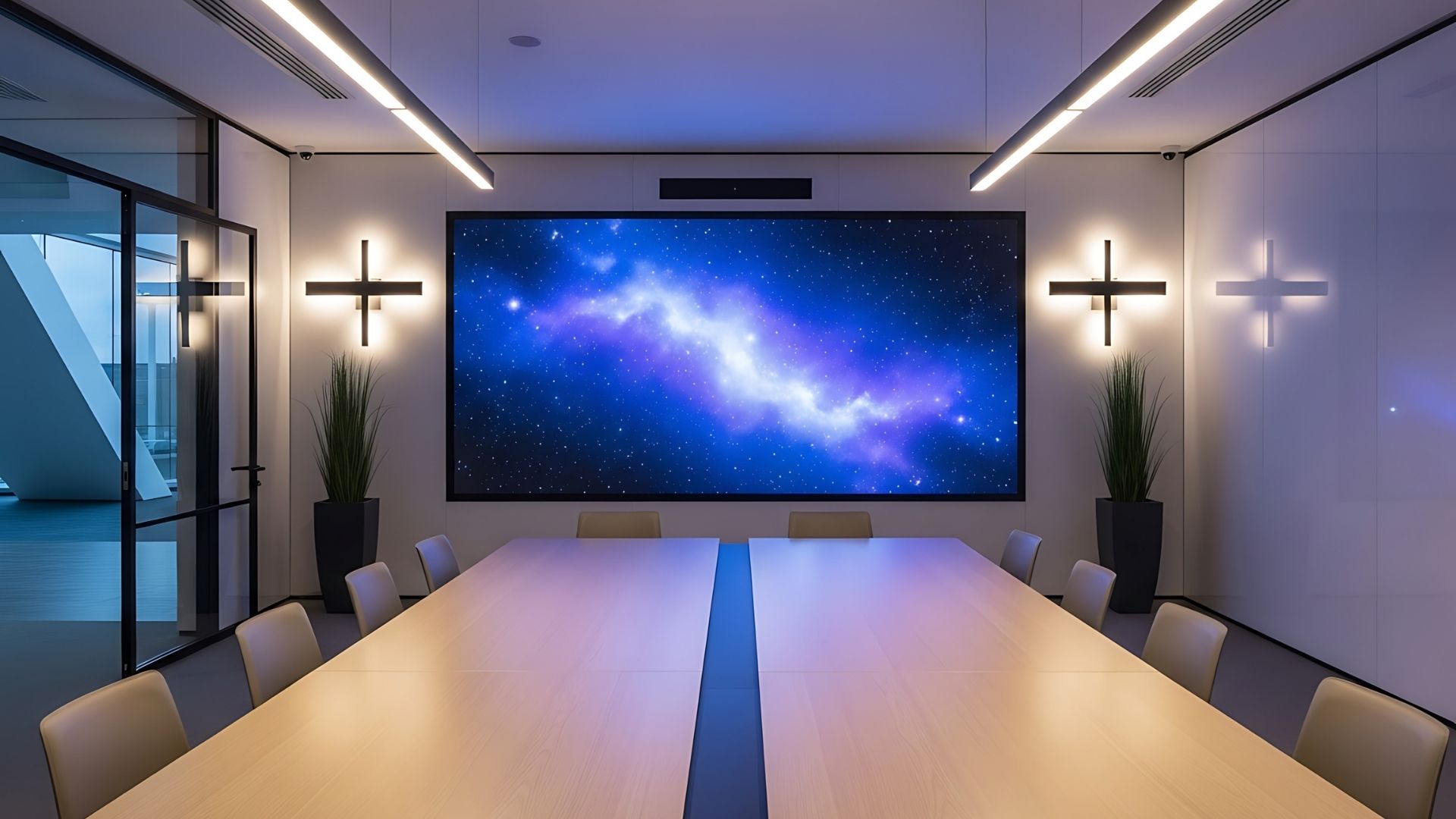
They enhance meetings and lectures with clear, larger-than-life visuals. This fosters more engaging and interactive communication. In lobbies, video walls reinforce brand identity with company updates and welcome guests with personalized content. In addition, they also support real-time data visualization for boardrooms. Video walls serve as powerful tools for both internal collaboration and external branding. This unifies communication strategies within a corporate environment.
Control Rooms: Critical Real-Time Monitoring
Essential in control rooms, security centers, and surveillance operations because they allow real-time monitoring of multiple video feeds. This is critical for quick decision-making and response. Video walls integrate seamlessly with SCADA, CCTV, and network management platforms. They serve as a visual hub for fast, informed responses. In high-stakes environments, the ability to see all critical data points simultaneously on a large, unified display reduces cognitive load. This speeds up analysis, directly impacting safety and efficiency.
Entertainment and Events: Immersive Experiences
Ideal for live concerts, sports arenas, exhibitions, and pop-ups. Their modular panels allow customized displays to suit each venue or event. They perform vibrantly under stage lighting or outdoor conditions. Video walls transform passive event attendance into immersive, dynamic experiences. This directly enhances audience engagement and satisfaction. They are not just showing content; they are actively shaping the audience’s perception and emotional response.
Transportation Hubs: Guiding Travelers
Airports and train stations use video walls to display schedules, wayfinding, advertisements, and crucial emergency messaging. In busy, dynamic environments like airports, clear and immediate communication is paramount for safety and customer experience. Video walls are vital for clear, real-time information dissemination. This directly impacts passenger flow, safety, and overall operational efficiency.
Education: Enhancing Learning
Touch-enabled video walls bring education to life. Ideal for university lecture halls, science centers, and museum exhibits. Content can be updated in real-time to suit any audience or curriculum. They create dynamic, interactive learning environments. This moves beyond static presentations. They foster greater student engagement and collaborative learning.
Ready to Transform Your Space? Contact Shultz Audio Video
Video walls offer unparalleled visual impact and operational advantages for businesses in San Diego. They provide dynamic, scalable, and reliable display solutions for various commercial applications. From enhancing customer engagement in retail to improving critical decision-making in control rooms, video walls deliver significant value.
Shultz Audio Video specializes in designing, integrating, and supporting these advanced video wall systems. Their expertise ensures a tailored solution that meets specific business needs and maximizes return on investment. For businesses ready to elevate their visual communication and transform their commercial space, connecting with a local AV integration expert is the next step.
Ready to Transform Your San Diego Business?
Is your San Diego business ready to step beyond static displays and embrace the dynamic power of video walls? If you’re looking to truly upgrade your message, engage your customers more effectively, and explore tailored solutions, the team at Shultz Audio Video is here to help. Don’t let outdated communication methods hold you back any longer.
We have solutions for a variety of workspaces. From restaurants to conference rooms to huddle rooms and boardrooms, we offer commercial audio visual solutions for every San Diego Business. Together, let’s discuss your specific needs and discover how the video wall solution can make a real difference for your San Diego business. Contact us today for a consultation by using the button below to request an appointment.